
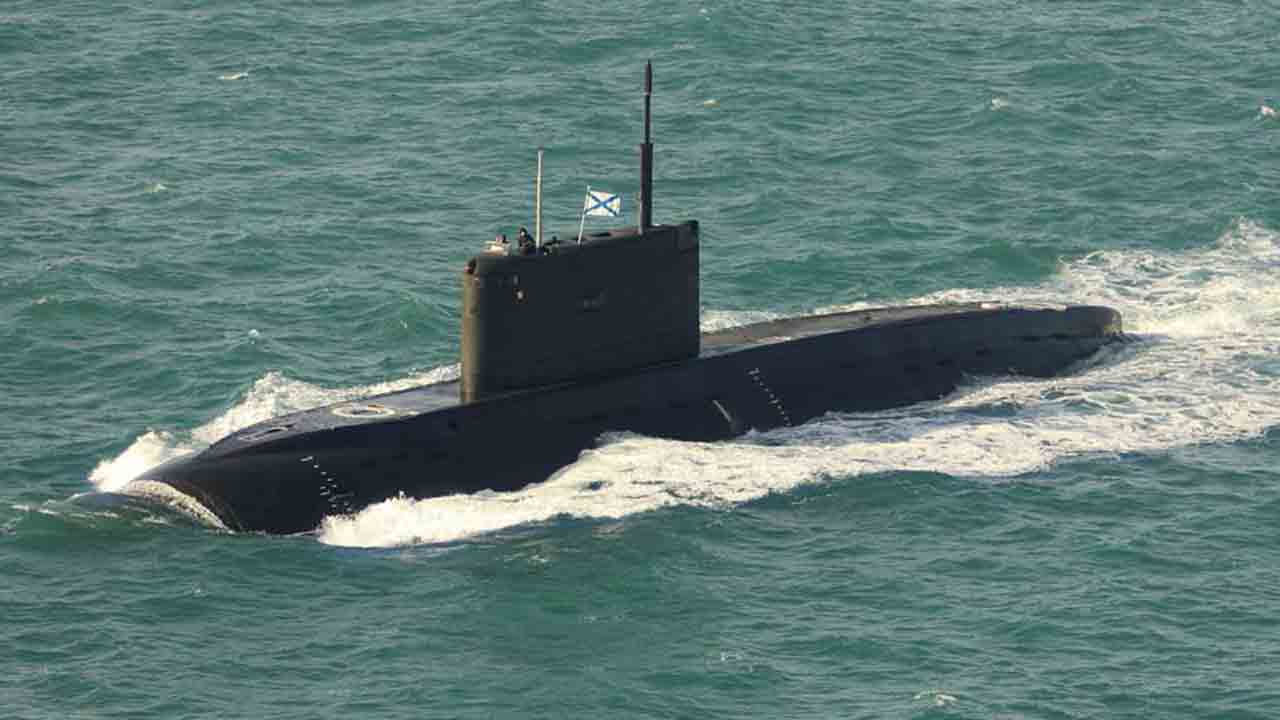
The operation mobilized frigates, helicopters, and a support tanker to track Russian vessels in the English Channel and the North Sea, in coordinated action with NATO allies
The Royal Navy has concluded a ten-day intensive surveillance operation following the passage of a Russian submarine and warships through maritime areas of interest to the United Kingdom. The action reinforced British naval monitoring at a time of heightened attention to Moscow’s military activity near strategic European routes.
According to the Royal Navy, the mission was part of a joint effort with NATO allies to closely track four Russian Navy vessels, including a submarine sailing on the surface, during movements through the English Channel and the North Sea.
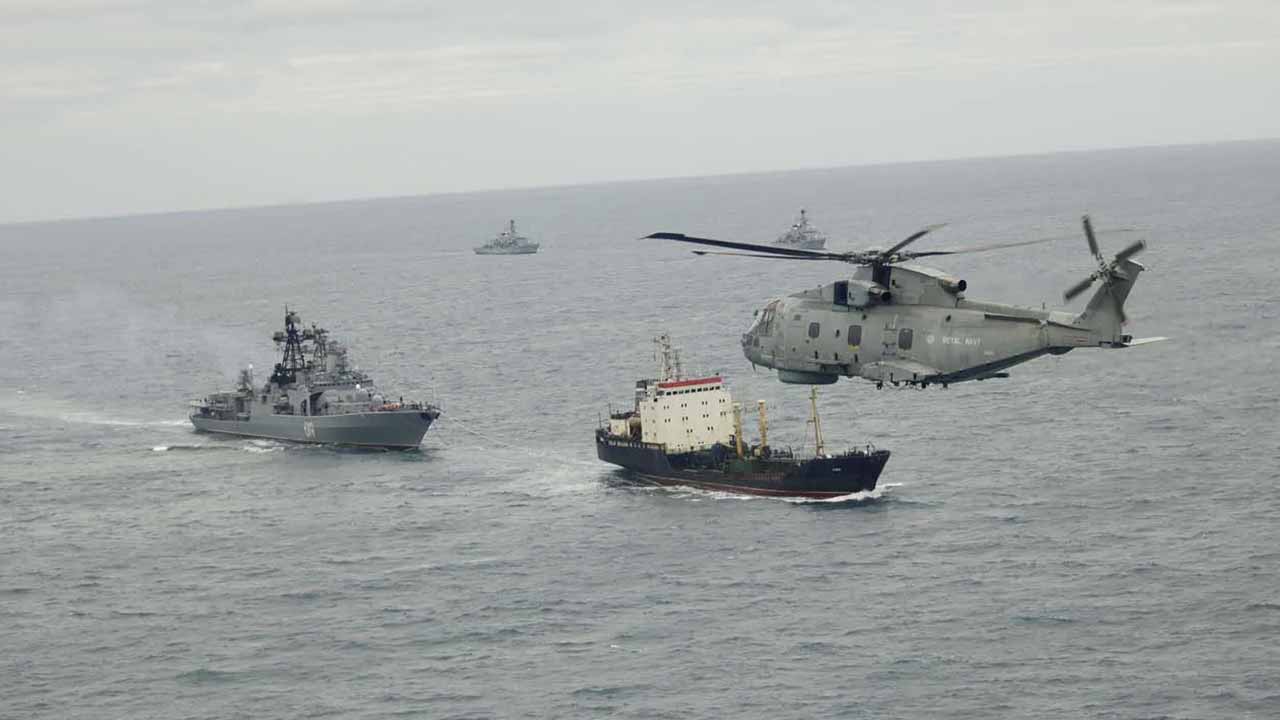
For the operation, HMS Somerset, HMS St Albans, HMS Mersey, and the support tanker RFA Tideforce were deployed, along with Wildcat and Merlin naval helicopters used to expand surveillance, identification, and tracking capabilities against moving targets.
Based in Portsmouth, patrol vessel HMS Mersey was activated three times between March 29 and April 7. During that period, it operated alongside a Wildcat helicopter from 815 Naval Air Squadron and RFA Tideforce to follow the Russian frigate Admiral Grigorovich, the Ropucha-class landing ship Aleksandr Shabalin, and the Kilo-class submarine Krasnodar.
The first activation of HMS Mersey took place on the morning of March 29, near Ushant Island, off northwestern France. On that occasion, the British vessel began reporting the movements of Aleksandr Shabalin as the Russian ship headed east through the English Channel toward the North Sea.
Days later, on April 2, Mersey was again deployed to intercept the passage of the frigate Admiral Grigorovich, which was sailing toward the Strait of Dover amid rough seas and strong winds caused by Storm Dave.
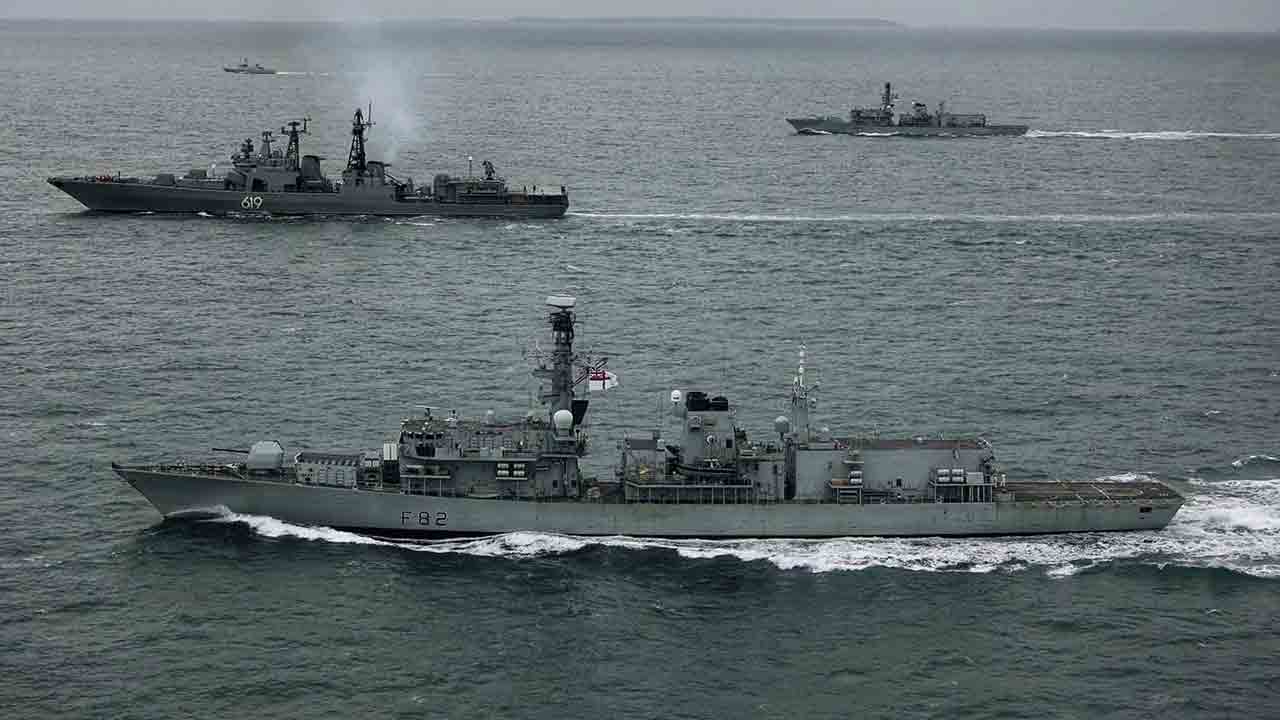
In this new phase of the operation, the Russian frigate met with the submarine Krasnodar and the tug Altay near Ushant. From that point, HMS Mersey and RFA Tideforce operated jointly with naval and air assets from Belgium, France, and the Netherlands to track the Russian trio during their eastbound transit through the English Channel.
On another front of the mission, the Type 23 frigate HMS Somerset intercepted the Russian Udaloy-class destroyer Severomorsk and the support vessel Kama near the coast of Brittany, France. The British ship used its radar and sensor suite to maintain constant surveillance over the Russian vessels during their transit through the English Channel and later toward the North Sea.
HMS St Albans, Somerset’s sister ship, briefly joined the mission as part of the formal handover of responsibilities for Operation Ceto, the United Kingdom’s standing operation focused on protecting Britain’s strategic deterrent and monitoring potential submarine activity in the North Atlantic.
After the handover, HMS Somerset began a new four-month cycle of operations focused on submarine surveillance and the protection of critical undersea infrastructure, including cables and pipelines considered essential for communications and energy security.
Lieutenant George Hage, executive officer of HMS Mersey, said the vessel regularly serves as one of the high-readiness units tasked with protecting British waters, alongside sister ships HMS Tyne and HMS Severn. According to him, the ability to maintain a constant presence amid increased Russian activity in recent months demonstrates the Royal Navy’s readiness level and the strength of cooperation with NATO allies.
Commander Matt Millyard of HMS Somerset said that since the ship returned from operations in December 2025, there had been a significant effort to quickly restore it to full readiness so it could reassume Operation Ceto. He added that the coming months are expected to involve a complex mix of missions, but stressed that the crew is prepared for the challenge.
The new operation comes at a time of growing vigilance by the United Kingdom and NATO over Russian naval movements, especially in areas close to strategic routes and undersea structures seen as essential to European security. The British government also announced on April 9, 2026, another expanded North Atlantic operation involving Russian submarines and the protection of undersea cables and pipelines.
Source and images: Royal Navy. This content was created with the help of AI and reviewed by the editorial team.
